Malaysia

Boeing’s relationship with Malaysia dates to 1947 when Malayan Airways Limited acquired its first Douglas DC-3. Today, Boeing has a corporate office in Kuala Lumpur, a Commercial Airplanes Field Service office at Kuala Lumpur International Airport, and a manufacturing facility in Kedah.

Boeing Composites Malaysia is the company’s first wholly owned manufacturing facility
in Southeast Asia with an all-Malaysian workforce of 1,100 people. The facility provides composite products and subassemblies for all Boeing commercial airplanes.

Boeing's 79-years partnership with Malaysia supports the development of aerospace and defense capabilities. Today, Boeing’s presence in Malaysia covers commercial aviation, defense and services, manufacturing, supply chain, academia partnerships, talent development efforts across the local industry and community impact initiatives.
Airplane over city

In numbers

120

Boeing commercial airplanes ordered by customers in Malaysia

~1,100

all Malaysian workforce

16

in-country aerospace suppliers

120K

parts delivered by Boeing Composites Malaysia in 2024

$1M

in charitable grants to 11 partners

10

university partners through 4 higher education grants

Latest news

Commercial Airplanes

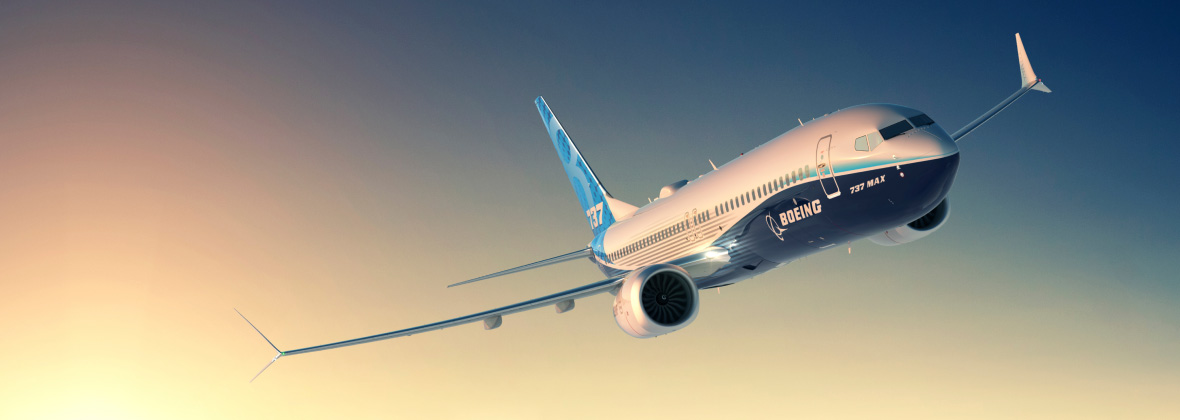
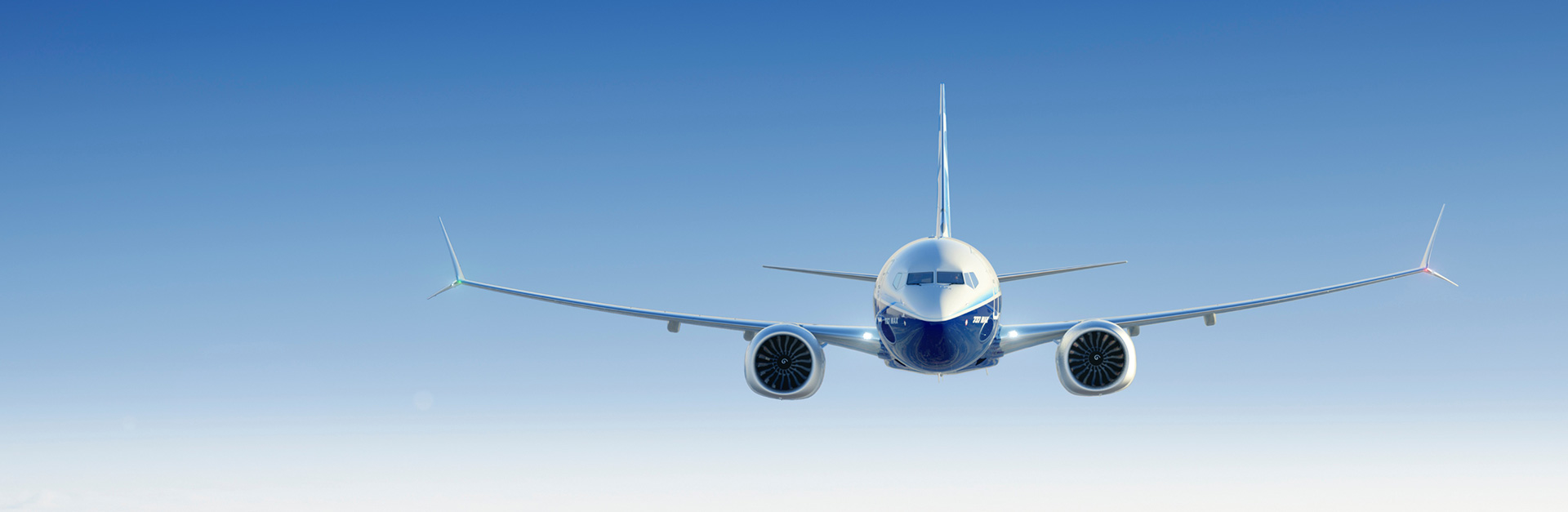
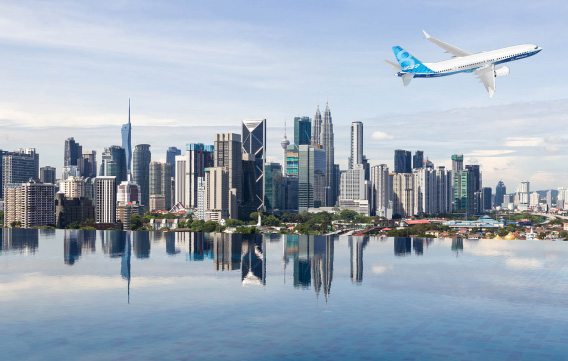
Boeing has a long history in Malaysia, supplying a wide range of commercial airplanes to the country’s carriers including Malaysia Aviation Group (Malaysia Airlines and Firefly), Batik Air Malaysia, MJets International, Raya Airways, World Cargo Airlines and Ascent Airways Malaysia.

The relationship dates back to 1968, when Boeing delivered three 707 jetliners to national carrier Malaysia‑Singapore Airlines (formerly Malayan Airways Limited). Malaysia Airlines has been a major Boeing customer ever since: in 1969 it became the first Southeast Asian customer for the 737‑100, purchasing five aircraft to replace the Comet 4, and it was also among Boeing’s earliest 777 customers in the region. Over the years the national carrier has taken delivery of nearly 200 Boeing airplanes, including more than 150 737s. In 2024 the airline marked 55 years of flying the 737.

In recent fleet renewal activity, Malaysia Aviation Group announced, in 2022, an order for up to 25 737‑8s in cooperation with Air Lease Corporation (ALC). In 2025 the group followed with an order for 18 737‑8 and 12 737‑10 jets to replace 737‑800s with more fuel‑efficient airplanes.

Batik Air Malaysia operates 737-800 and 737-8 jets.  The full-service carrier took delivery of its first 737‑8 in May 2017 and began commercial 737‑8 service from Kuala Lumpur to Singapore on May 22, 2017.

Together, these operators underline Boeing’s enduring presence in Malaysia’s commercial aviation sector, spanning trunk carriers, regional airlines and cargo operators.


737 MAX

Defense, Space & Security

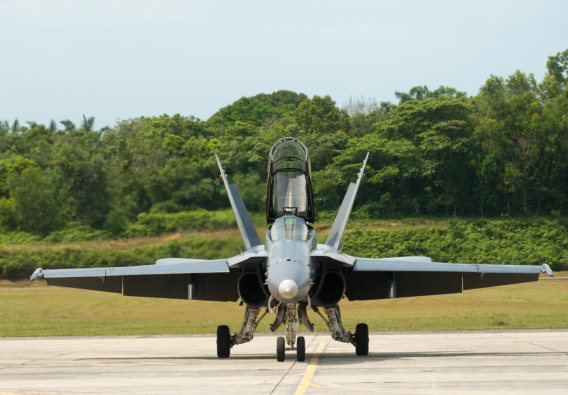
In 1993, Malaysia ordered eight F/A-18D Hornets from Boeing to strengthen the airpower capability of the Royal Malaysian Air Force. The Royal Malaysian Navy operates 12 ScanEagles, a long endurance unmanned aerial system (UAS) designed and manufactured by Insitu Inc., a wholly owned subsidiary of The Boeing Company.

Defense Aircraft

Sustainable Aviation

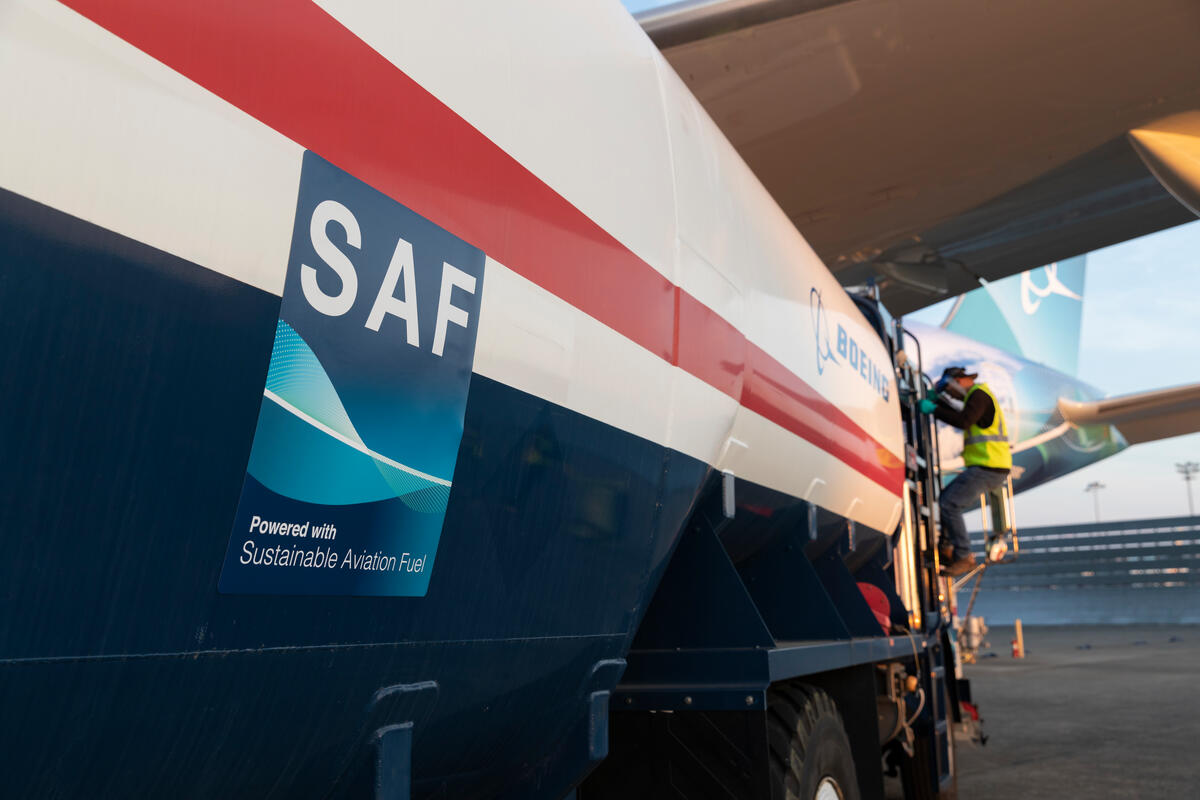
Boeing actively supports decarbonization in Malaysia, equipping the local community with the knowledge and skillsets to drive a domestic SAF industry.  In 2025, Boeing, Sarawak Economic Development Corporation (SEDC) and carbon removal specialist Equatic signed a Memorandum of Understanding (MOU) to develop a carbon removal demonstration facility in the Malaysian state of Sarawak. The project aims to advance carbon removal technology as well as supporting the Sarawak Government’s clean energy plans with significant environmental and economic benefits. Boeing collaborated with the National Aerospace Industry Corporation (NAICO) on capacity building at the annual MYAero Sustainable Aviation Symposium. Unlocking local SAF potential helps reduce emissions, improves fuels security and drives positive economic impact across multiple industries such as aviation and agriculture sectors. Southeast Asia has sufficient feedstocks to meet all of its own jet fuel needs, according to a report developed by Roundtable on Sustainable Biomaterials (RSB) and supported by Boeing. Malaysia, along with Thailand, Vietnam, Indonesia and the Philippines accounts for about 90% of the region’s SAF feedstock supply capacity. A techno-economic assessment was completed on the production of SAF from agricultural wastes in Malaysia and Southeast Asia, to support the acceleration of a local SAF industry.

Community Engagement

Boeing has contributed more than $1M in charitable contributions and grants to Malaysia since 2004 for initiatives on health and well-being, the environment, and social and economic independence.

Boeing works with the Institut Kemahiran Belia Negara (National Youth Skills Institute) in Jitra, Kedah to train 30 students in machining technology and fabrication, while guiding them toward employment possibilities in the aerospace industry.

In 2025, Boeing and i-CATS University College signed a Memorandum of Understanding (MOU) to advance aerospace education and talent development in Sarawak. The partnership supports Sarawak’s ambition to become a regional hub for aerospace and high-technology industries and builds upon i-CATS’ recent launch of its Aerospace Engineering program.

Boeing was recognized by the American Malaysian Chamber of Commerce in 2024 and the past several years for the company’s efforts in advancing STEM-related programs and promoting sustainable livelihoods.

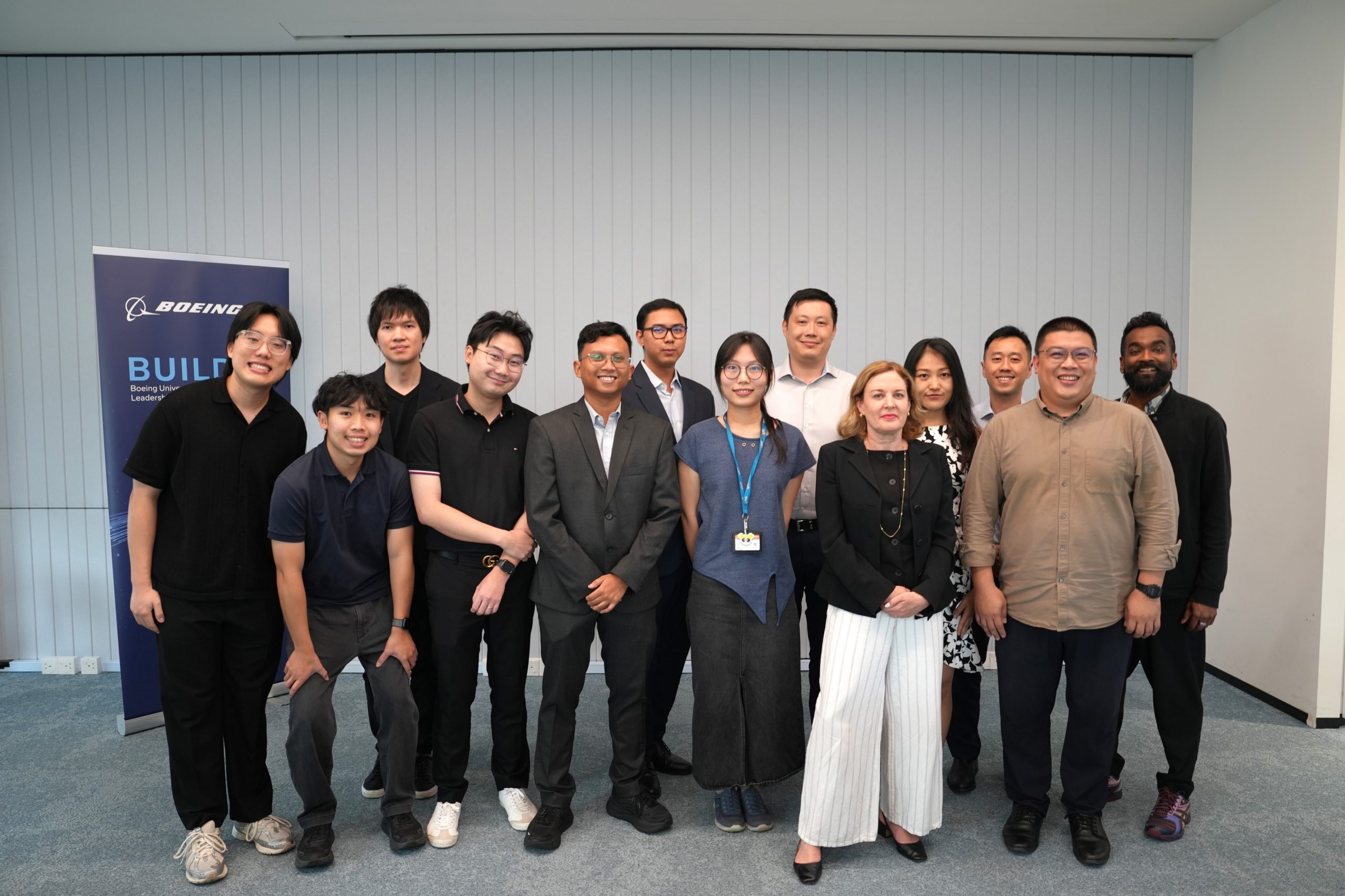
Boeing support important causes in Malaysia through its work with community partners. Boeing and the National Aerospace Industry Corporation Malaysia (NAICO) teamed up to inspire the next generation of aerospace talent in Malaysia. Malaysia’s Aerospace Technical and Vocational Education and Training roadshow gathered more than 1,000 students for a full day of hands-on learning, exhibitions, industry forums, and technical workshops.

Learn more about Boeing’s global engagement strategy

Strengthening Malaysia Aerospace Industry

Over the years, Boeing has partnered with Malaysia’s aerospace industry, suppliers and universities to grow capabilities. Boeing and the Civil Aviation Authority of Malaysia (CAAM) have teamed up to make air traffic operations more efficient at Kuala Lumpur International Airport (KLIA). This strategic collaboration will enhance operational efficiency at one of Southeast Asia’s busiest airports, streamlining coordination between pilots and air traffic controllers for smoother air traffic management. Boeing also partners with CAAM to organize aviation safety dialogue and discussions. In 2025, National Aerospace Industry Corporation Malaysia (NAICO), Malaysia’s key aerospace agency under the Ministry of Investment, Trade and Industry; together with Boeing, brought together key stakeholders from government, industry, academia, and international partners at the MyAero Sustainable Aviation Forum to advance sustainable aviation initiatives across the Asia-Pacific region. In 2023, Boeing and NAICO hosted the first Aerospace Supply Chain Forum, bringing together over 200 representatives from Malaysian companies, universities, and government agencies to explore collaboration in aerospace supply chain, training, MRO, research, and sustainable aviation. Several Malaysian suppliers support Boeing Commercial Airplanes programs, including the production of composite panels, major structural assemblies, engine fan cowls, precision machine parts, landing gear and avionics systems.