777X wing

Philippines

Boeing has a longstanding relationship with the Philippines and its 85-year-old national carrier, Philippine Airlines (PAL), as well as the country’s largest domestic carrier, Cebu Pacific Air. Boeing's presence in the Philippines began in the mid-20th century as commercial aviation started to grow in the country. In 1941, Philippine Airlines was established, making it the first commercial airline in Asia.

Boeing’s supply chain spend in the Philippines is approximately $100 million annually and is one of the largest in Southeast Asia.

In 2026, we mark the 80th anniversary of Boeing’s partnership with Philippine Airlines. As early as 1946, PAL operated a fleet of five Douglas DC-3s and chartered a DC-4 to ferry 40 American servicemen from Manila to Oakland, California, making PAL the first Asian airline to fly across the Pacific. Boeing has a customer service office in Manila.


In numbers

10

777-300ERs operated by PAL

4

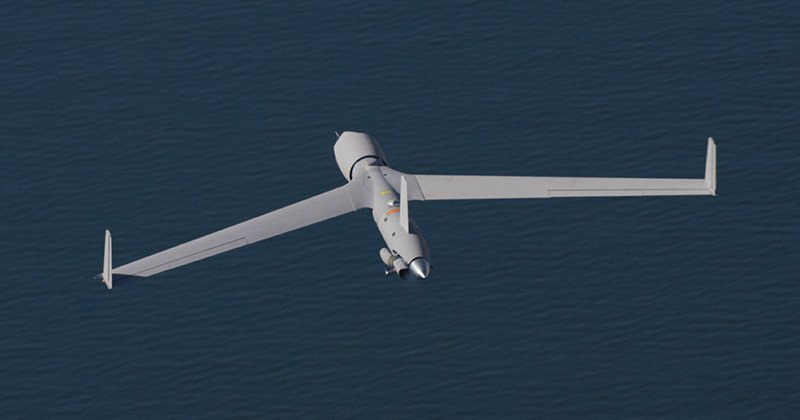
ScanEagle systems (18 aircraft) operated by the Philippines armed forces

$100M

annual supply chain spend

+$2.8M

in charitable contributions to date

Commercial Airplanes

Since 1946, Philippine Airlines (PAL) has operated DC-3,-4, -6, 6B -8, DC-10, MD-11, 727-100, and several variants of the 727, 737, 747 and 777-300ER. Boeing airplanes have played a crucial role in the airline's growth, enabling it to serve both domestic and international markets. PAL currently operates several widebody 777-300ERs (Extended Range), including on routes between the Philippines, the U.S. and Canada. In 2024, PAL started its nonstop flights from Manila to Seattle on the 777-300ER. Cebu Pacific Air launched its original service with Boeing airplanes, operating the DC-9 and 757-200.

Philippines airline

Defense, Space & Security

The Armed Forces of the Philippines operate four ScanEagle Unmanned Aerial System (UAS). ScanEagle is manufactured by Insitu, a wholly owned subsidiary of Boeing.

The ScanEagle UAS provides intelligence, surveillance, and reconnaissance (ISR) capabilities, offering a vital edge for the Philippine’s maritime domain awareness.


ScanEagle ScanEagle

Services

Philippine Airlines selected Boeing’s Airplane Health Management (AHM) Select product in 2023 on a five-year agreement. The Boeing AHM Select product provides strong prognostics and diagnostics capability based on more than 20 years of data collected from operator experiences, combined with the domain knowledge of Boeing on airplane-specific fleet metrics. Fueled by these data-driven insights, AHM Select is designed to deliver better information related to parts orders, decreased engineering workload, reduced labor time, and increased available flight time – resulting in improved management of costs and operations efficiency for the airline.


Philippines airline

Local Suppliers

Boeing suppliers in the Philippines produce parts for all Boeing Commercial Airplanes programs. Collins Aerospace produces 737 lavatories, and galley inserts for multiple programs, as well as the passenger service units for the 787. JAMCO Philippines provides 777 and 787 galley panel assemblies, and Moog Controls Corporation manufactures flight actuation system components for multiple airplane programs. Several Philippine companies such as Famous Secret Precision Machining and Applied Machining Corp. provide components and subassemblies. Today, Boeing’s supply chain spend in the Philippines is approximately $100 million annually and is one of the largest in Southeast Asia.

Sustainable Aviation

Southeast Asia’s feedstocks could supply about 12% of global sustainable aviation fuel (SAF) demand by 2050.  The Philippines, alongside Indonesia, Thailand, Vietnam and Malaysia, accounts for roughly 90% of the region’s SAF feedstock potential.

Boeing supported a techno-economic assessment on producing SAF from agricultural waste in Southeast Asia, including a case study in Palawan using non-standard coconut feedstock. High-potential regions include Cagayan Valley, North Mindanao and southern Philippines, where agricultural residues are available year-round.

Through the Island Skies Alliance, Boeing works with the Philippines Department of Transportation and the Philippine Coconut Authority to advance domestic SAF development and decarbonization.

Aviation Safety

Boeing has been partnering with the International Civil Aviation Organization (ICAO) and the Federal Aviation Administration (FAA) to organize training in support of safety enhancements and human capital development in the Philippines. Boeing and Civil Aviation Authority of the Philippines (CAAP) have ongoing collaboration in supporting both regional and national aviation safety objectives.

Community

Through impactful community investments and dedicated employee engagement, Boeing and its employees support innovative partnerships and programs that align with the company’s strategic objectives worldwide. Over the years, Boeing has supported important charitable causes in the Philippines including disaster relief due to impact of cyclones, combating malnutrition in vulnerable communities by providing nutritious food through health clinics and cancer detection awareness. Today, Boeing supports:


Philippine Eagle Foundation

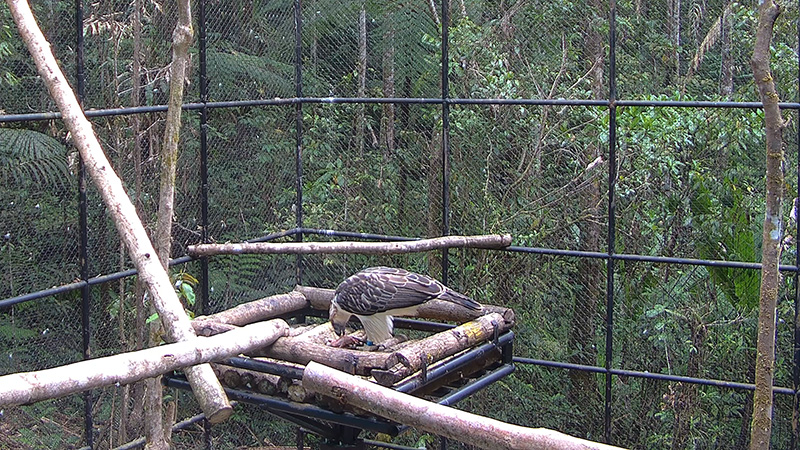
Boeing supports the foundation’s conservation efforts of the endangered Philippine Eagles in Davao City. Boeing’s grant and commitment to environmental protection has helped construct holding cages for six breeding Philippine eagles (3 natural pairs) as part of conservation efforts. Boeing partnered with the Philippine Eagle Foundation to fund the National Bird Breeding Sanctuary (NBBS), a new breeding facility for the Philippine Eagle in Davao City. Boeing has also adopted two Philippine Eagles as part of conservation efforts.

Philippine Eagle Foundation
Link Center for the Deaf

Boeing supports the center’s efforts to increase employment and livelihood opportunities for hearing-impaired youth in Manila. Efforts include providing continuous training programs for teachers, establishing and strengthening existing special education programs for the hearing-impaired. The goal of these efforts is to increase employment and livelihood opportunities for hearing-impaired youth and under-skilled adults through comprehensive training, mentorship, and business support.

By clicking the above links, you will leave our site and be directed to external third-party websites